
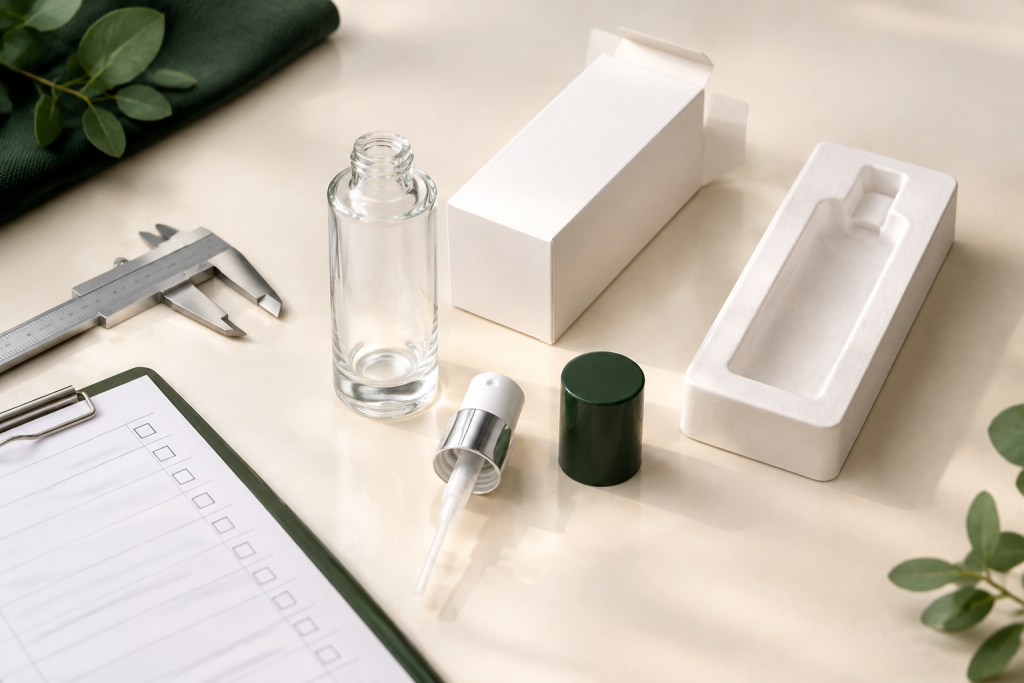
A packaging sample is useful only when the team knows what it represents. It may show a bottle shape, a closure combination, a decoration trial or a proposed presentation pack. Before a review, identify which decisions the sample can support and which checks still require a later stage.
Identify the sample and its purpose
Record the bottle reference, closure references, drawing versions and decoration version. Note whether the sample is empty, filled, undecorated or assembled with substitute components. Photograph it with a simple reference label so the team can connect comments to the correct version.
A sample with the right silhouette can still differ from the proposed production set. Mark any substitutions clearly and avoid approving untested components by association.
Review the bottle against the drawing
Check the dimensions that matter for filling, handling, labeling and packing against the agreed drawing and tolerances. Review nominal fill capacity and the available headspace with the filling team. The capacity named in a product title is not a complete dimensional specification.
Inspect the bottle under consistent lighting and discuss the acceptance criteria for visible glass features. Record observations with photos rather than relying on broad descriptions such as “looks good.”
Evaluate the closure as an assembly
Fit the intended pump, dropper, roller or cap to the bottle using the proposed assembly method. Review alignment, grip, dispensing action and clearance. Agree on the appropriate compatibility and leakage tests with the relevant packaging and filling partners, using the intended formula where required.
Separate appearance approval from functional approval. A sample that looks correct does not establish performance under storage or transport conditions.
Check artwork on the physical surface
Confirm the logo size, position, label edges, print colors and finish. Review how the artwork sits on curved areas and how it appears beside the closure. Use the latest approved artwork files and keep a record of any changes requested after the sample was produced.
Review the pack without assuming protection
Place the assembled product in the proposed carton or insert and check fit, access and presentation. A neat fit does not demonstrate shipping protection. If the package will travel through a particular distribution route, agree on relevant handling and transport testing before treating the design as validated.
Close the review with a written decision
- List the sample references and versions reviewed.
- Record approved details and the scope of approval.
- List requested changes and remaining tests.
- Identify who will review the next sample.
- Keep an agreed reference set for future comparisons.
A written review record makes the next project stage easier to manage. It gives design, sourcing and filling teams one shared description of what is approved and what remains open.
Discuss your sample review requirements and the reference material needed for your packaging project.